

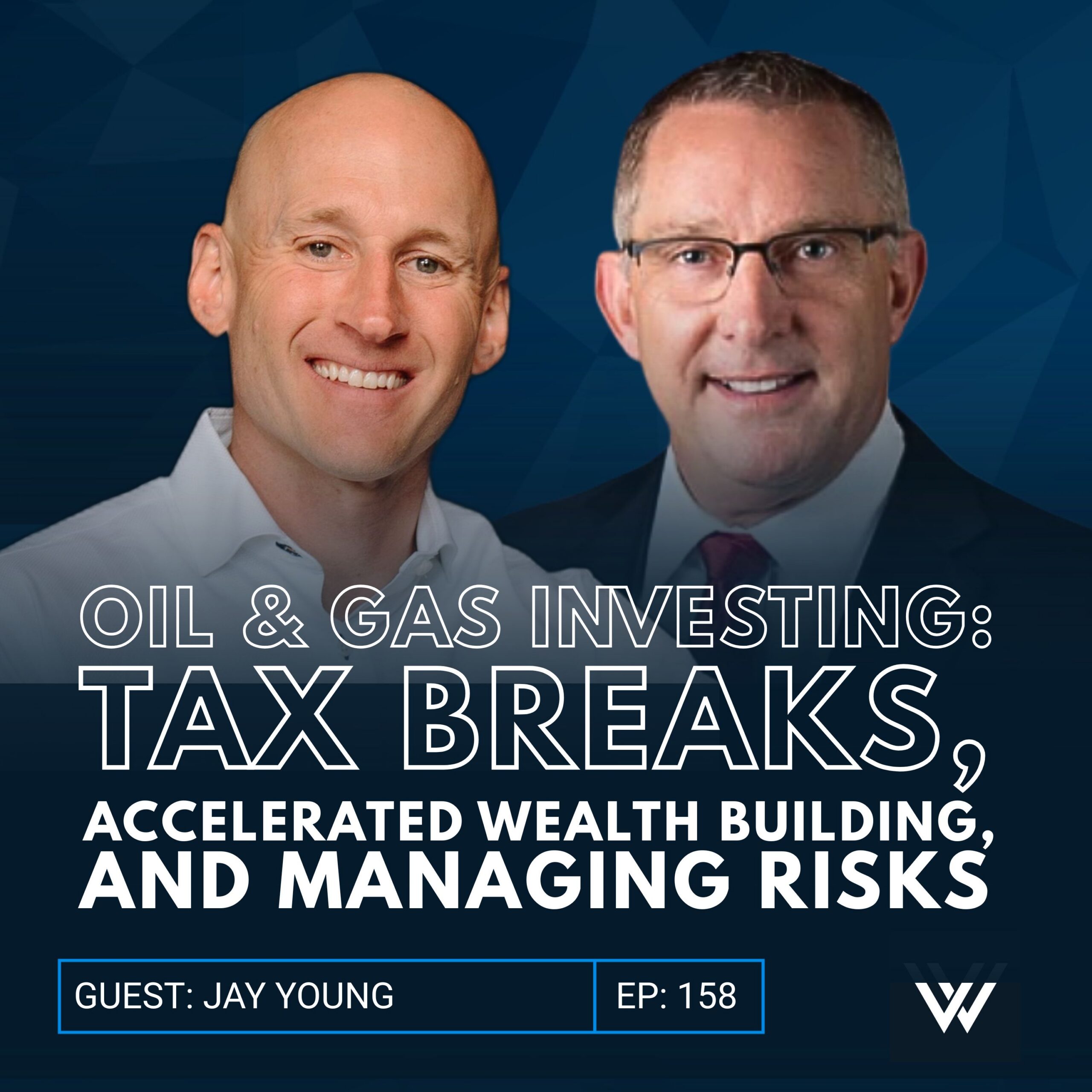
Episode 158
Oil & Gas Investing: Tax Breaks, Accelerated Wealth Building, and Managing Risks with Jay Young
Is oil and gas really just “a great write-off,” or are high-income entrepreneurs missing the bigger opportunity? On this episode of the Vital Wealth Strategies Podcast, host Patrick Lonergan sits down with Jay Young, founder of King Operating and author of The Upside of Oil and Gas, to show how direct oil and gas investing can reduce taxes, generate cash flow, and build long-term wealth. Jay grew up in the West Texas oil fields and has spent 35 years in the industry. He shares how early-career lessons, including deals where investors walked away with nothing but a deduction, led him to build an acquire, develop, and divest model that drills in proven areas and aims to return investor capital quickly.
Pat and Jay break down how an oil and gas investment can create a first-year deduction of around 90%, how the 15% depletion allowance makes ongoing income more tax-efficient, and how a 1031 exchange can move real estate owners out of being landlords and into oil and gas. They also cover general partner risk and investor protections, the future of oil and natural gas demand, and why aligned incentives matter when choosing an operator. The episode closes with what Jay has learned from 15 years in TIGER 21, how his definition of success has changed, and why faith, family, and generosity matter more than any financial return.
Key Takeaways:
- Tax savings should never be the only reason to invest. The best oil and gas investments combine a strong deduction with real cash flow and upside, so the tax tail doesn’t wag the dog.
- The tax code allows direct oil and gas investors to deduct roughly 90% of their investment in the first year through intangible drilling costs and depreciation.
- A 15% depletion allowance applies to gross production income, so some of the ongoing cash flow is sheltered from tax.
- Drilling in proven areas with modern technology greatly lowers exploration risk. Today, the main risk is the price of oil.
- Jay’s acquire, develop, and divest model aims to sell part of its assets regularly, which can return capital faster and increase the velocity of money.
- Real estate owners can use a 1031 exchange through a qualified intermediary to roll a property into an oil and gas fund.
- Investors are general partners only in the first year, then convert to limited partners. Insurance and modern safety practices add further layers of protection.
- Choose an operator who invests alongside you. When incentives are aligned, the operator only makes money when you do.
- Most wealthy entrepreneurs built their wealth by owning businesses and real assets, not by relying only on the stock and bond markets.
Learn More About Jay:
- The Upside of Oil and Gas by Jay Young
- Official Website: kingoperating.com
Episode Resources:
- Visit vitalwealth.com/resources to download FREE resources
- Follow on Instagram at https://www.instagram.com/vitalwealthstrategies
- Follow on Facebook at https://www.facebook.com/VitalStrategiesPodcast
- Follow on LinkedIn at https://www.linkedin.com/in/patricklonergan/
Credits:
- Sponsored by Vital Wealth
- Music by Cephas
- Audio, video, research and copywriting by Victoria O’Brien